
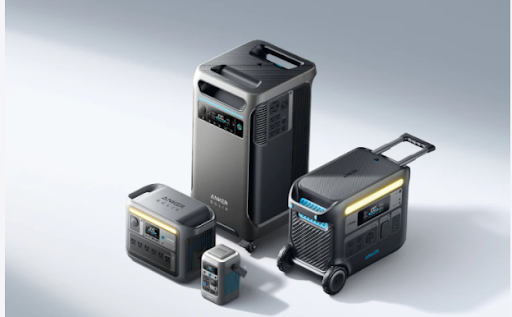
Storm rolls in, lights blink, and everything goes still. A solar power generator brings the house back to life without fuel cans or engine noise. You unfold the panels, let the sun do its thing, and run what matters fridge, lights, Wi‑Fi, the basics that keep a home comfortable.
Anker SOLIX builds these systems around tough portable power stations. High‑efficiency solar panels feed long‑life LFP batteries, while smart MPPT charging squeezes more energy from changing light. Use it for outages, road trips, off‑grid cabins, or a quiet weekend under the stars. Day to day, it can even trim bills with peak shaving.
What a Solar Power Generator Includes
- Solar panels to collect DC power
- A battery (LFP for long life and stability) to store it
- A pure sine‑wave inverter to deliver household AC power
- Ports for everything: AC outlets, USB‑C PD, USB‑A, 12V DC
No fumes. No pull‑cord. Set it down, plug in, and go.
Portable or Home‑Scale? Pick Your Lane
Portable Power You Can Carry
C1000 | C800 Plus | C800 | C300 | C200
These portable solar generators power options suit camping, RV life, tailgates, and short home outages. They charge phones and laptops, keep a cooler cold, run lights and fans, and power camera gear or a projector at night.
- C1000: Weekend RV trips and heavier kits; quick to recharge
- C800 Plus / C800: Campsite workhorse for lights, routers, CPAPs (model‑dependent), coffee makers (check watts)
- C300 / C200: Day trips and essentials small, light, easy to stash
Whole‑Home and Off‑Grid Backup
F3800 | F3000 | F2000
When you want the fridge, lights, tools, and even many air conditioners to stay on, step up to the F‑series. These systems can power up to 99% of common appliances, support 120V/240V, and expand capacity with extra batteries up to 53.8kWh for long outages. Solar input up to 3,200W (dual 11–165V MPPT) helps you refill fast in good sun. Panels reach about 23–25% efficiency; MPPT tracking targets around 99% to make the most of shifting weather.
Want hands‑off backup? Pair F‑series with a Home Power Panel for automatic switchover during outages. Prefer a simpler setup? Use a transfer switch for essential circuits only.
What It Can Run (Real‑World Sense)
- Outdoors: camping lights, mini‑fridges/coolers, phones, tablets, cameras, drones, speakers, projectors
- RV/Van: vent fans, routers, lighting, compact cooking gear (confirm wattage)
- Home: Wi‑Fi, lights, a refrigerator, and medical devices like CPAP (model‑dependent)
Quick runtime thumb‑rule:
Runtime ≈ (battery Wh × 0.85) ÷ device watts
- ~1,000Wh station → 100W TV ≈ 8–9 hours
- ~1,024Wh station → 60W mini‑fridge ≈ 14–15 hours
Numbers vary with temperature, startup surges, and duty cycles but this keeps planning easy.
Why Anker SOLIX
Power for all: From small portable power stations to home‑scale systems with up to 12,000W AC output and 120/240V support. Expand as you grow battery stacks up to 53.8kWh.
Faster solar: Up to 3,200W solar input on advanced setups with dual high‑voltage MPPT controllers.
Built to last: LFP batteries handle thousands of cycles.
Peace of mind: Over 200 million products shipped across 146 countries, with strong safety standards and hassle‑free warranty.
Backup that pays back: Use stored energy during peak hours to help cut monthly costs.
Simple Buying Checklist
- Capacity (Wh): more watt‑hours = more runtime
- Inverter (W): match continuous and surge watts to your biggest load
- Solar input & range: higher input = quicker charging; check voltage and connectors
- Battery chemistry: choose LFP for durability and stability
- Ports: AC, USB‑C PD, USB‑A, 12V DC cover most setups
- Weight & carry: if you’ll move it often, pick a comfortable size
- UPS/backup mode: for fast switchover at home
- Warranty & support: look for multi‑year coverage and responsive service
Easy Setup Tips
- Aim panels at the sun; re‑angle mid‑day if you can.
- Keep panel glass clean dust steals watts.
- Shade the power station itself; let panels take the heat.
- Use short, quality cables to reduce voltage drop.
- Top up before a storm or a trip.
- Update firmware when available for better standby performance.
FAQ
Q. Is a solar power generator safe indoors?
Yes. No exhaust. Keep vents clear and use solid cables.
Q. Can it run a coffee maker or hair dryer?
Sometimes. Check the device’s watts and compare to the inverter’s continuous/surge rating.
Q. How fast will solar recharge it?
Depends on sun, panel size, and MPPT. Bigger arrays finish sooner; shade slows everything down.
Q. Do I need special panels?
Use panels within the station’s input range, with the right connectors. High‑efficiency folding panels are great for travel.
Q. Gas vs. solar what’s better?
Gas runs long if you have fuel, but it’s loud and must stay outside. A solar power generator is quiet, clean, and easy to use every day.
Bottom Line
If you want clean backup power without the fuss, a solar power generator makes it simple. Grab a portable model for the road and quick outages. Build into an F‑series setup if you want whole‑home coverage. Either way, you get steady power, lower noise, and a lot less worry when the weather turns.
Leave a Reply